
Guides & advice
How to choose motorcycle gear.
Helmets, gloves, jackets and protection: our guides to understand the standards, compare specifications and choose gear that suits the way you ride. Nothing here depends on a merchant: these are the rules common to all gear sold in France.
What are you looking for?
Go straight to the category you are interested in.
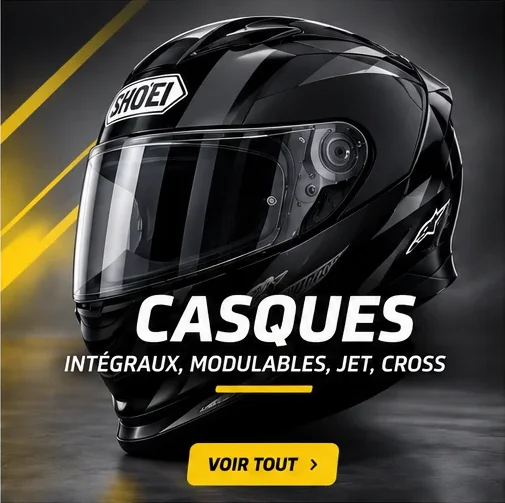
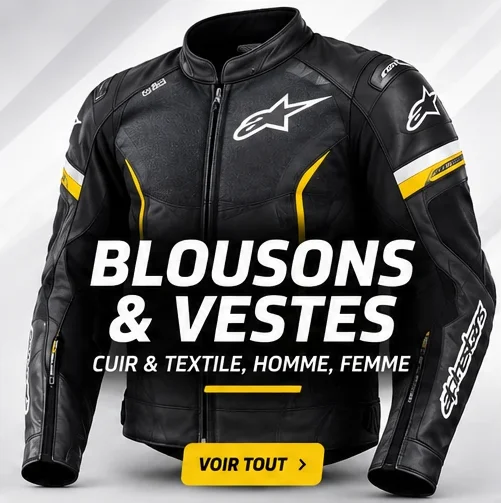
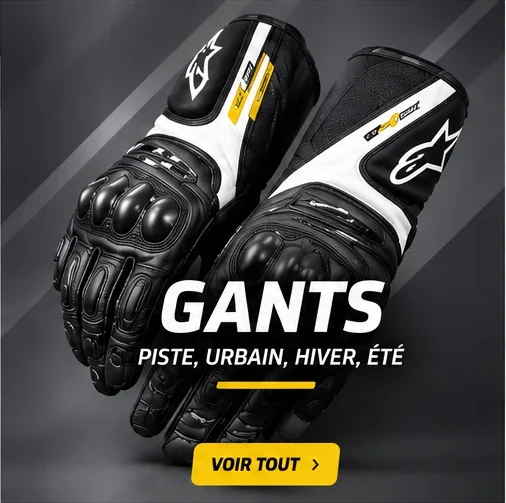
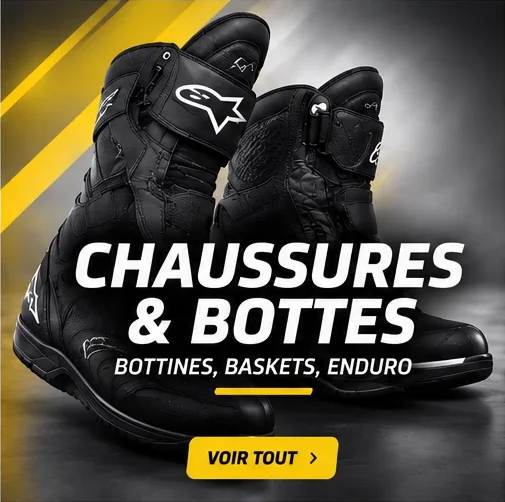
Our motorcycle guides and advice
Practical advice to understand your gear and the points to check before choosing.
- Helmets Visor fogging: Pinlock supplied, prepared or absent What the Pinlock insert does against fogging, and the difference between a helmet supplied with the insert or only prepared for it: what the catalogue listings state. Lire le guide →
- Boots Winter motorcycle boots: the EN 13634 standard and waterproofing The four digits of the EN 13634 standard on a motorcycle boot, and why it does not guarantee waterproofing: what the catalogue listings state. Lire le guide →
-
 Trousers
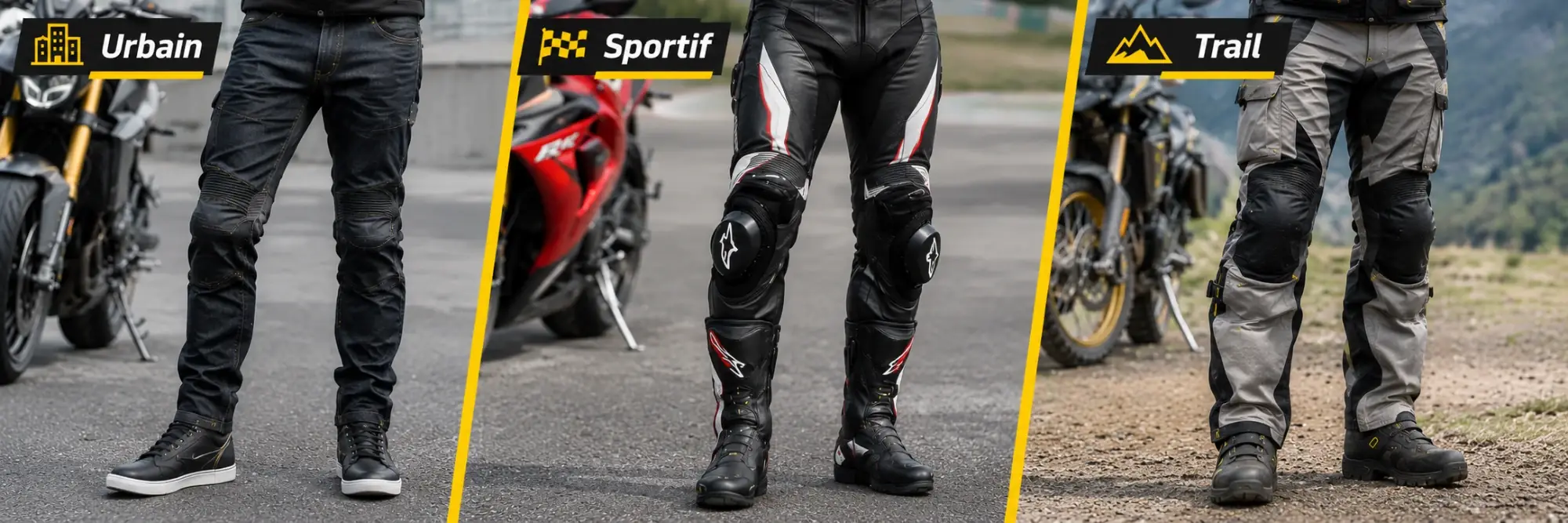
Approved motorcycle trousers: classes A, AA, AAA and knees
Classes A, AA and AAA of the EN 17092 standard, levels 1 and 2 of knee armour: what the law requires and what the trouser listings state.
Lire le guide →
-
 Gloves
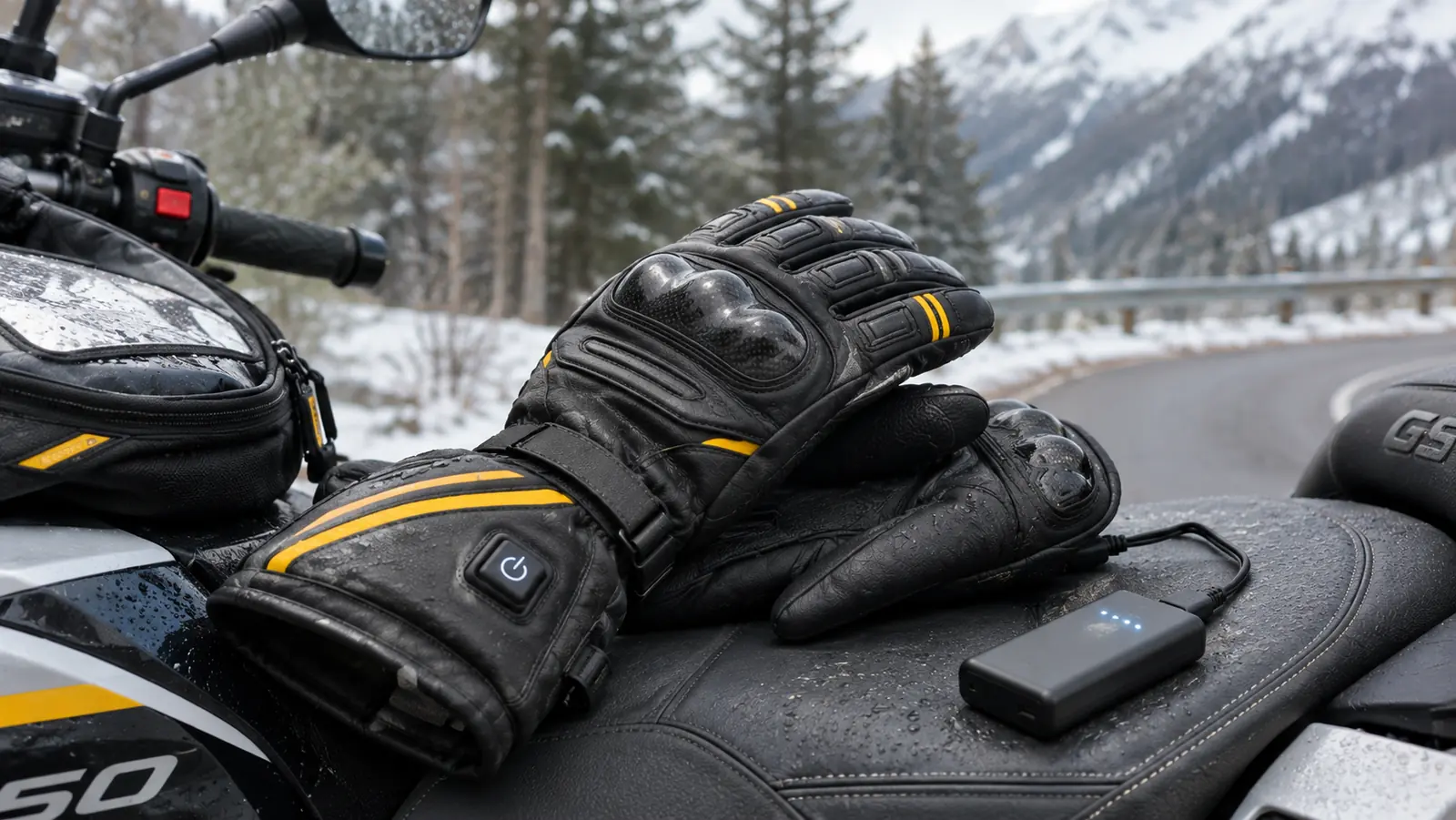
Heated motorcycle gloves: what to know before buying
Battery or connection to the motorcycle, heat levels, claimed battery life, EN 13594 standard: what manufacturers say and what the listings declare.
Lire le guide →
-
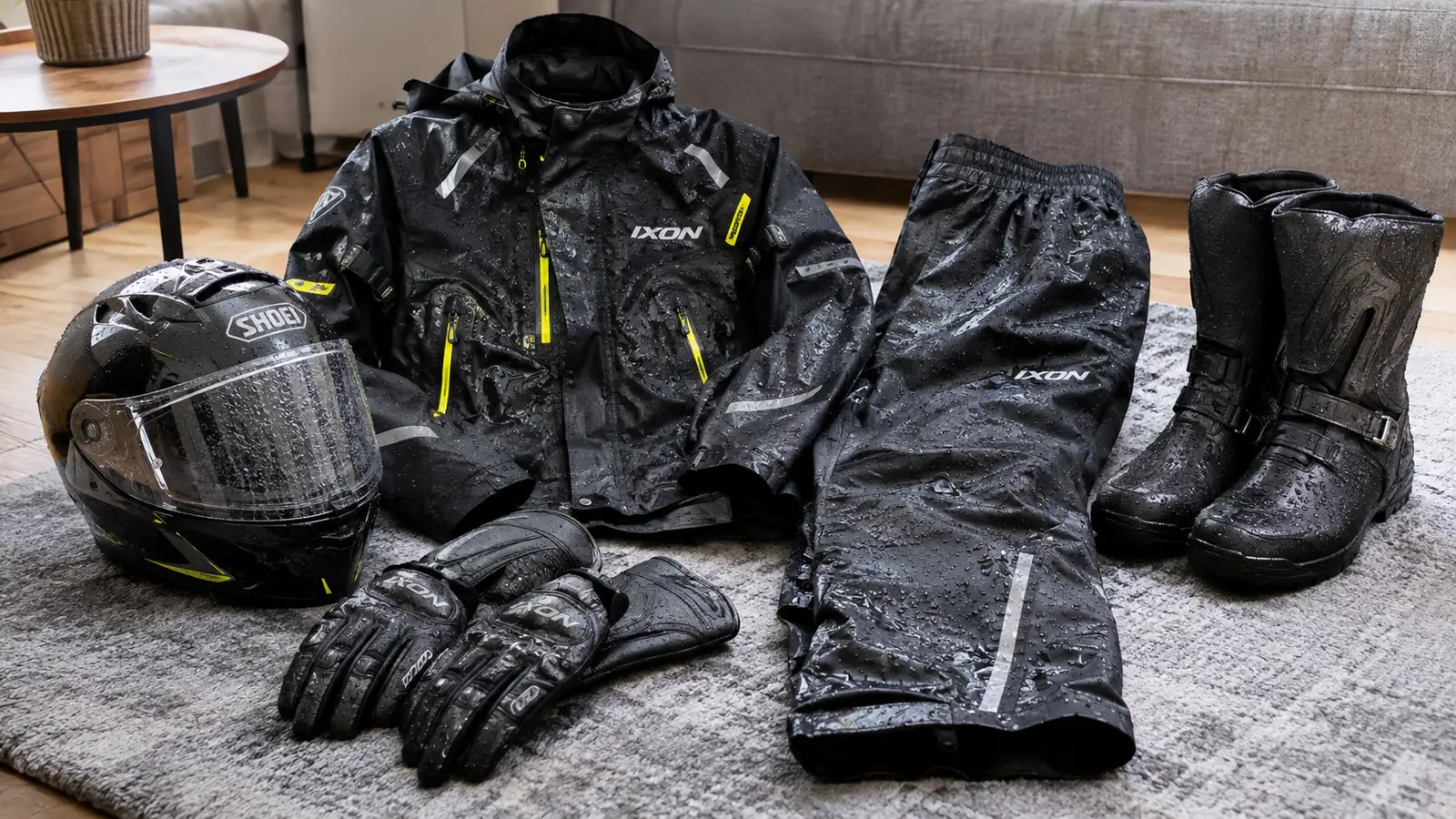 Gear
Motorcycle rain gear: from helmet to boots
Membrane or water-repellent, Pinlock against misting, waterproof boots and gloves: what the catalogue listings declare for riding in the rain.
Lire le guide →
-
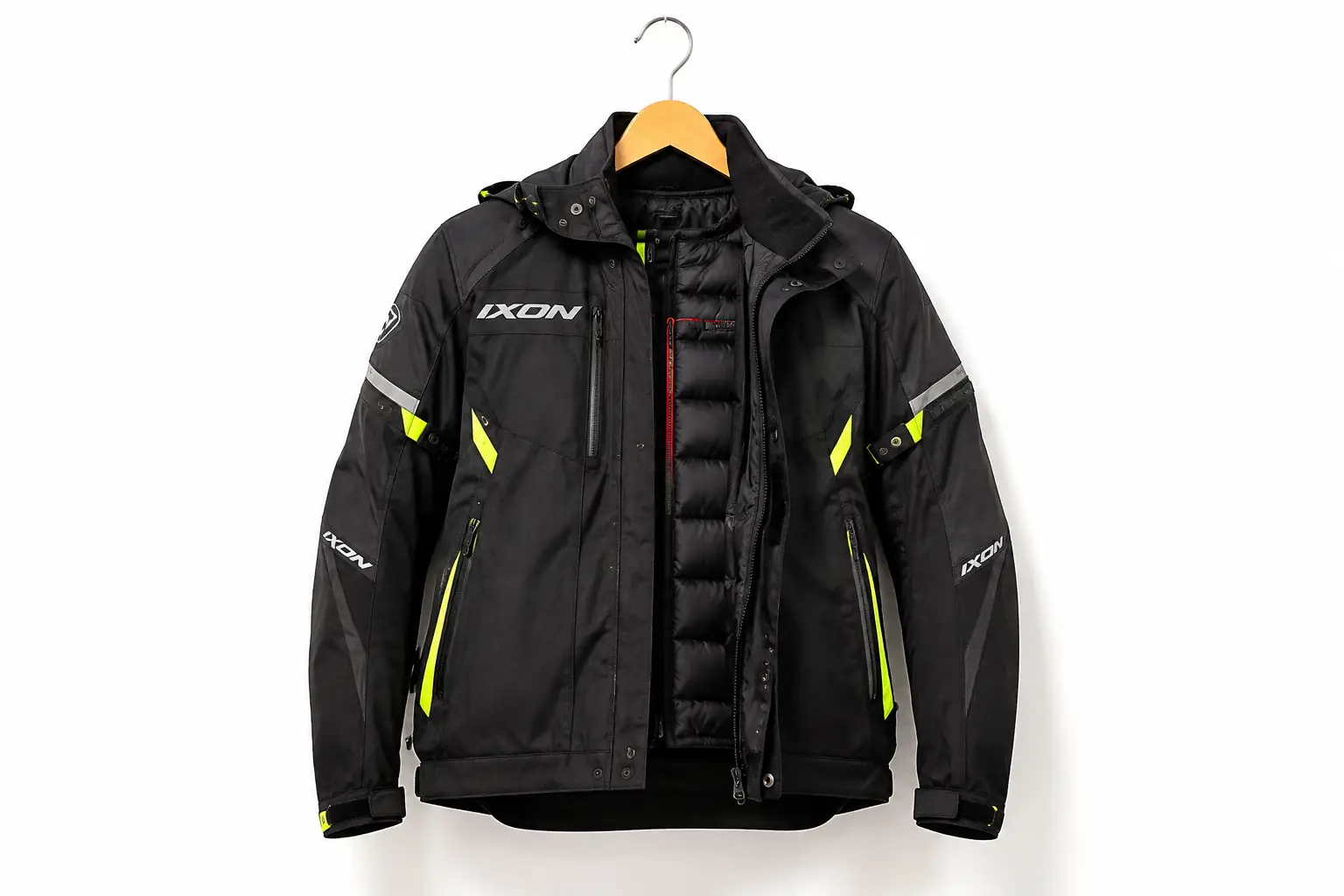 Jackets
Winter motorcycle jacket: membrane, lining and EN 17092 class
Membrane or water-repellent, removable lining, class AA or A under EN 17092: what the motorcycle jacket listings in the catalogue declare.
Lire le guide →
-
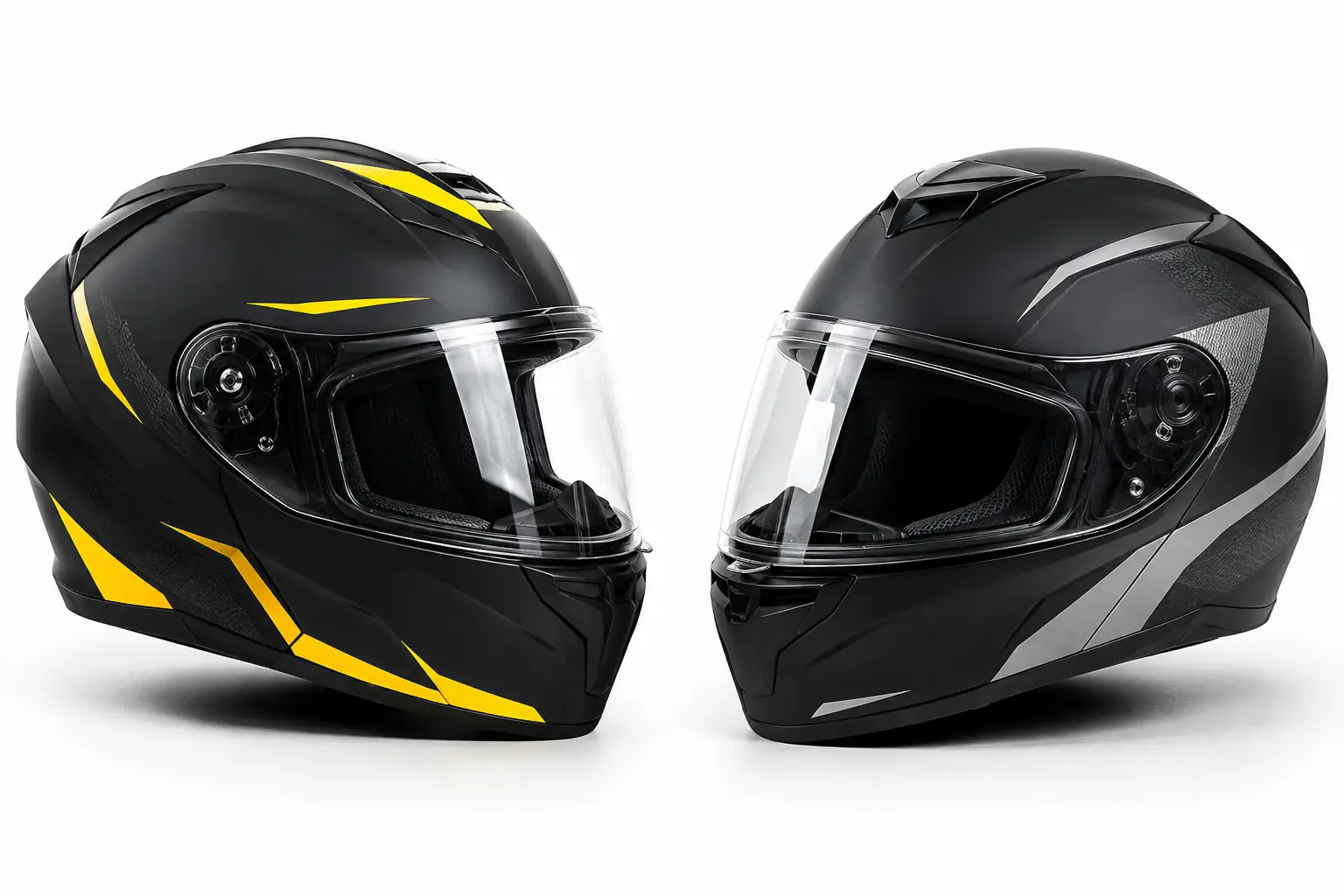 Gear
LS2 FF818 Storm III or Scorpion Exo-530 Air: which to choose?
Two entry-level ECE 22.06 full-face helmets compared on today's price at several merchants, the declared features and what is left to try on.
Lire le guide →
-
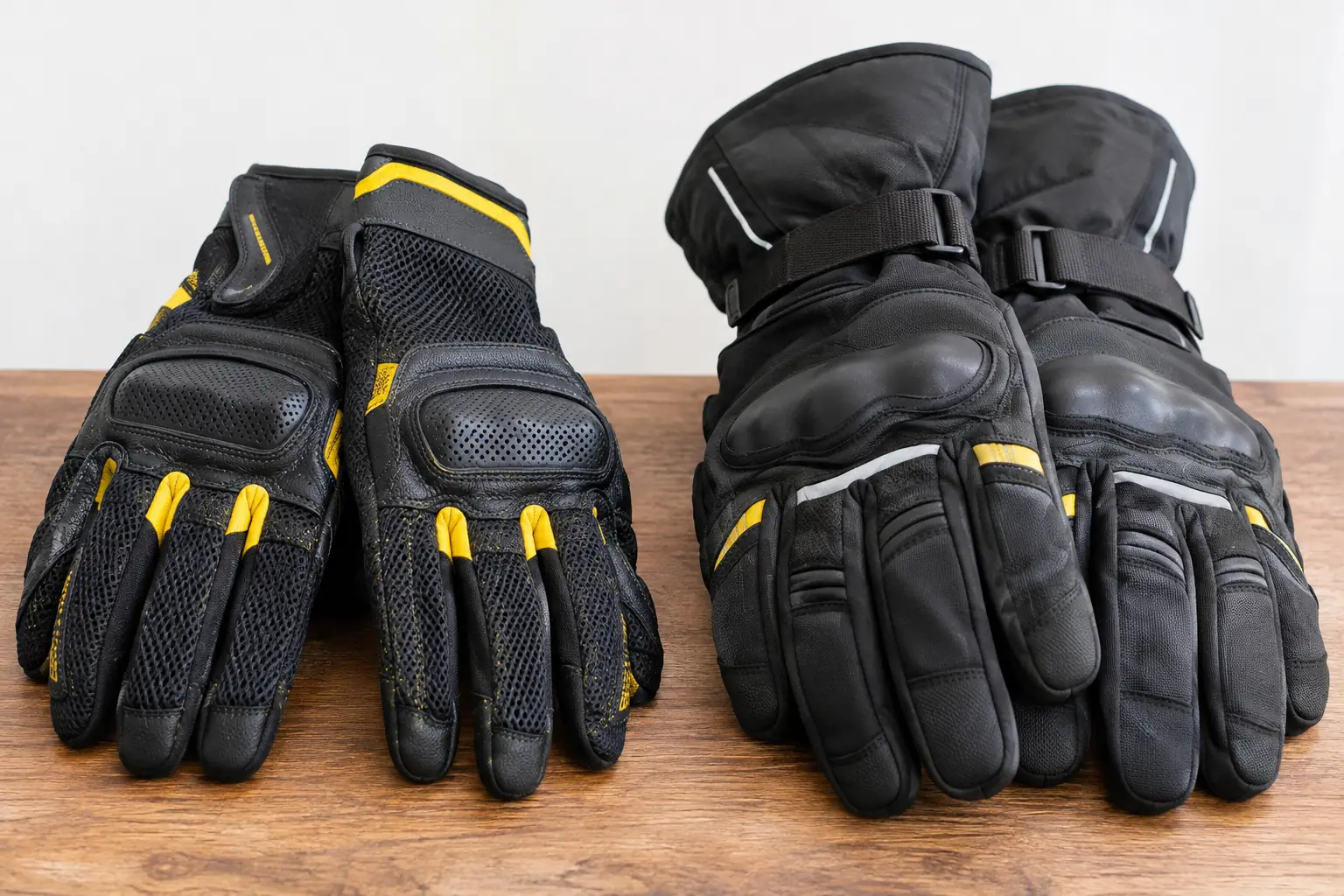 Gloves
Summer, mid-season or winter motorcycle gloves: how to choose
EN 13594, level 1 or 2, membrane or water-repellent: what sets a summer motorcycle glove apart from a winter one, backed by catalogue figures.
Lire le guide →
-
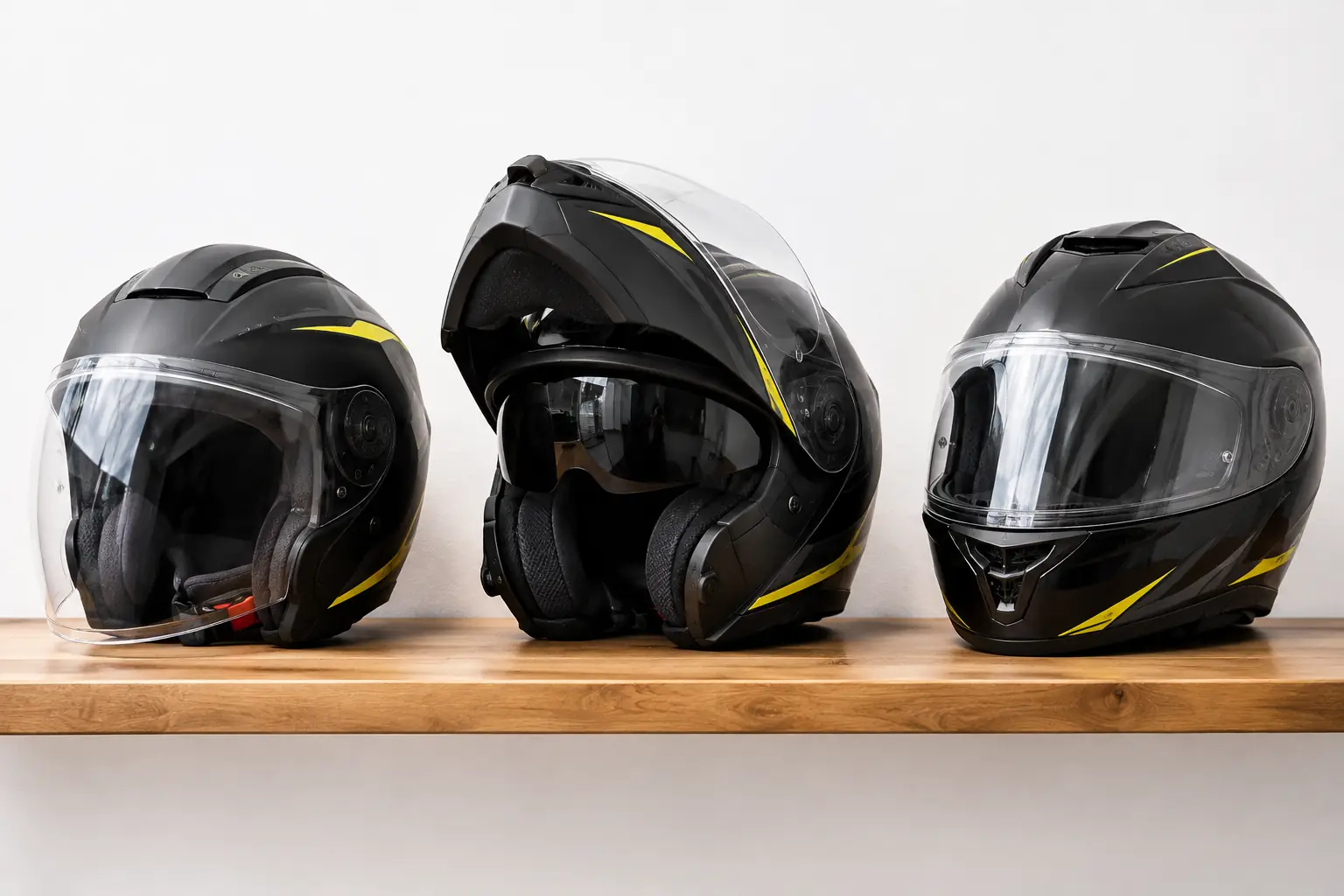 Helmets
Open-face, flip-up or full-face helmet: what does the ECE 22.06 standard say?
Open-face, full-face or flip-up: what the ECE 22.06 standard tests on each type of helmet, how to read the P, J or P/J label, and which type for which use.
Lire le guide →
Motorcycle standards, explained simply
The markings on gear are not always easy to read. The four references to know.
Finding your helmet size
Measure your head with a tape measure, about a centimetre above the eyebrows, passing over the widest part of the back of the skull. Note the measurement in centimetres.
| Head circumference | Size |
|---|---|
| 53 – 54 cm | XS |
| 55 – 56 cm | S |
| 57 – 58 cm | M |
| 59 – 60 cm | L |
| 61 – 62 cm | XL |
| 63 – 64 cm | 2XL |
This table is the most common correspondence, but each manufacturer has its own cut: between two sizes, the shape of the shell (round, oval) matters as much as the number. A new helmet should hold the cheeks firmly without creating a pressure point on the forehead.
La norme ECE 22.06, en clair
Depuis le 1er January 2024, new helmets sold in the European Union must be approved to ECE 22.06. It replaced ECE 22.05, which had been in force since 2000.
What 22.06 adds: impacts tested at several speeds and on more points of the shell, a rotation test (the most serious injuries often come from the head rotating, not from the frontal impact), and approval of the accessories sold with the helmet, sun visor included.
The label sewn to the chin strap carries the approval number. An ECE 22.05 helmet bought earlier is not banned from use; it simply can no longer be sold new.
Clothing and protection standards
A “motorcycle” jacket without a standard is just a jacket. Three references come up on labels:
- EN 17092 — clothing. Five classes: AAA (the most protective, race suits and road leathers), AA (everyday use), A (urban use), B (abrasion resistance without armour), C (armour carrier only, to wear under another garment).
- EN 1621-1 — shoulder, elbow, hip and knee armour. Level 1 or level 2, level 2 absorbing more.
- EN 1621-2 — back protectors, same level logic.
- EN 13594 — gloves. Level 1 or 2, with the mention KP when knuckle protection is tested.
A jacket sold without back and elbow protectors is common: the pockets exist, the armour is bought separately. It is a point to check before comparing two prices.
Comparer deux prix sans se tromper
- Size. On the same listing, two merchants may offer two different sizes. Choose yours before reading the ranking: otherwise you are comparing two different items.
- Shipping costs. The prices shown here exclude delivery. Free-shipping thresholds vary from one merchant to another and can overturn a close ranking.
- Availability. A low price on an out-of-stock item is not a price. The stock status is shown on each line.
- The model year. A previous-year model is often the same product at a lower price; sometimes it is a different cut. The full model name is on the merchant's page.
These points are general information. If in doubt about a piece of gear's approval, the sewn-in label and the manufacturer's instructions are what count.

